


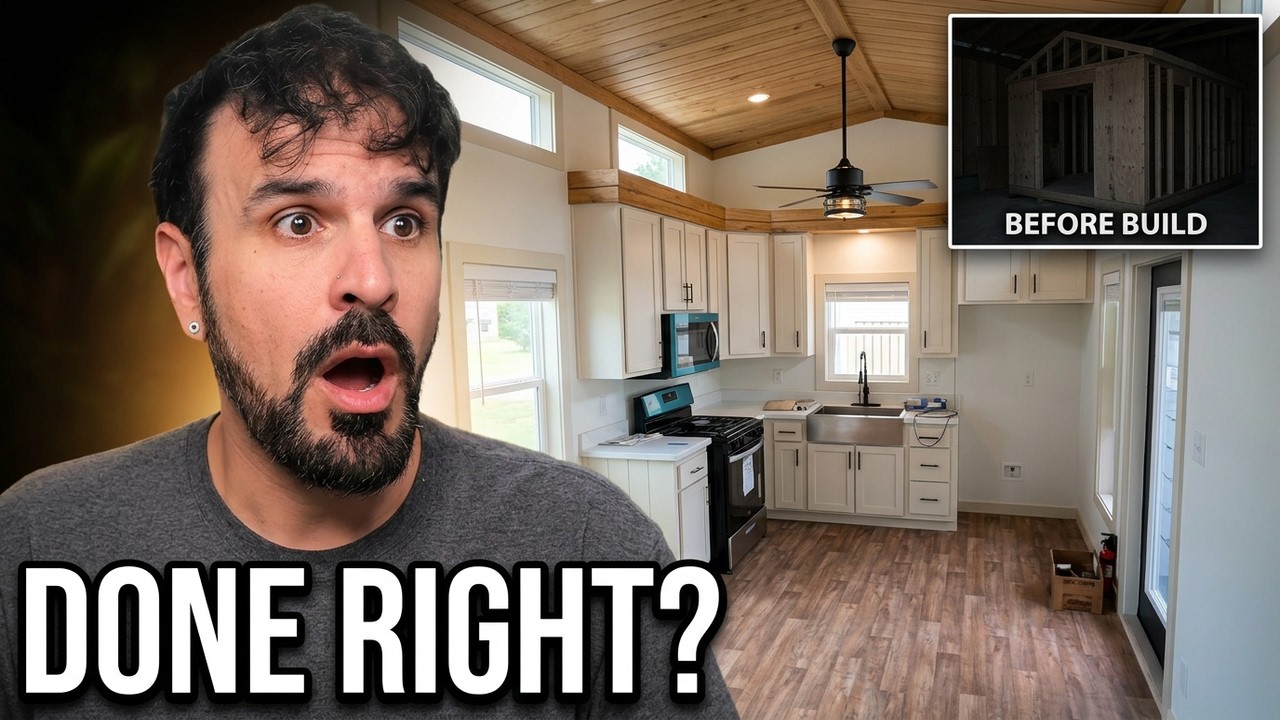
Every now and then a tour comes along that's less about the house and more about the person who built it. Misty's first walkthrough is one of those. She's Southern, she knew exactly what she needed, and the decisions she made along the way show it. I've spent a good few years in the tiny house and real estate industry, and when I watch tours like this I tend to notice things a little differently. Hopefully something here is useful if you're on your own tiny house journey.
Watch the full tour first, then read on for what stood out to me.
The Porch: A Non-Negotiable
Misty added a 10-foot porch and her reason is just the best: she's Southern and she can't live without one. Fair enough. But beyond the personal logic, it's a genuinely good call. A covered porch extends the livable square footage of a tiny home without adding to the regulated structure — it's outdoor living space that costs relatively little to build and adds a lot to how the home feels day to day.
The Southern yellow pine tongue-and-groove ceiling on the porch is the detail I'd have everyone pay attention to. It's warm, it's durable, and it makes the space feel considered rather than functional. If you're ever looking for a porch upgrade that punches above its cost, a tongue-and-groove ceiling is that upgrade.
The Kitchen: Three Smart Calls
Misty made three decisions in the kitchen that I think are worth highlighting individually.
First, the 42-inch tall upper cabinets. Standard kitchen uppers in a tiny house sit at 36 inches. That extra 6 inches isn't dramatic, but in a small space storage is cumulative — every additional inch of cabinet height adds hidden capacity that doesn't cost floor space. If your builder offers this as an upgrade and your ceiling height allows it, it's a conversation worth having.
Second, the propane gas stove. A lot of tiny house builds default to electric cooktops because they're simpler to install. There's nothing wrong with that. But if cooking is something you actually care about, propane gives you a different kind of control — instant heat response, visual flame, no lag. The trade-off is managing a propane tank on site. It comes down to knowing your own lifestyle, and Misty clearly does.
Third — and this is my favourite decision in the whole tour — she converted the originally planned washer/dryer space into a deep pantry closet. The reason she gives is exactly right: she thought about how she actually lives, not what the default floor plan said. She needed deep hidden storage for cleaning supplies and bulk items, and she made it happen. That kind of self-awareness when designing a tiny house is more valuable than any single feature.
The Staircase: Dead Space Put to Work
The yellow pine stair treads tie in beautifully with the porch ceiling — a small continuity detail that makes the home feel like a single considered design rather than a collection of decisions. But the more practical win is the four storage drawers built into the stair risers. That space is structurally wasted in most tiny house builds. Misty turned it into exactly the right kind of storage: the light bulbs, batteries, and occasional-use items that you need somewhere for but don't want cluttering up a kitchen drawer. If you're in the planning stage, ask your builder about stair drawers. It's one of those additions you'll thank yourself for a year into living there.
The Bathroom: Details That Matter
The bathroom has a lot going on and almost all of it is good thinking. The double niche built into the shower wall — two recessed shelves — eliminates hanging caddies and bottles sitting on the floor. In a small bathroom that kind of clean organisation makes a visible difference to how the space feels. The rainfall and handheld combination is a small luxury that people consistently respond to; it just feels more considered than a standard showerhead.
The clear shower glass instead of frosted is a strong design instinct too. It keeps the bathroom feeling open rather than boxed off, which matters in a room that's already compact. The shiplap feature wall ties the whole room back to the yellow pine running through the rest of the home — it gives the bathroom character that a standard tile backsplash wouldn't.
And the tankless water heater. Misty mentions it a couple of times during the tour and it's worth the attention. Compared to a traditional tank unit, it recovers floor and cabinet space that's genuinely useful in a small home. Really worth factoring in during the build planning stage.
The Bedroom: Designing Around Real Life
Misty moved the washer and dryer into the bedroom. Her reason: she doesn't want them visible when guests come over. That's a completely valid call — it's her home and her priorities. The one practical note for anyone considering the same move is to think about the noise. A washer and dryer running a cycle while you're trying to sleep is a different proposition to one in a dedicated laundry space. If you go this route, spec a quiet unit specifically.
The two side-by-side closets are well proportioned, and her thinking around bed placement is exactly the kind of real-world problem-solving that only becomes obvious when you're standing in the space. The mini split position limits her options and she's working through that in real time during the tour — which is relatable, because sometimes you genuinely can't see those details until you're physically in the room.
The Loft: Storage Done Right
The cabinets along the entire back wall of the loft — 12 inches deep, full width — is excellent thinking. Off-season clothes, extra linen, holiday storage, anything you access rarely but need somewhere for: all of it goes up here, out of the daily living space below. The loft becomes a functional deep storage zone rather than just a sleeping platform.
The double mattress idea that pushes together into a queen for guests is the other detail worth highlighting. It's exactly the kind of flexible thinking that makes tiny living work long-term. You're not just designing for your Tuesday morning routine — you're designing for when life shows up. Guests, family, changing circumstances. Misty has clearly thought through all of it, and it shows throughout the whole tour.
Join the Community
Planning Your Own Build? Start Here.
Tours like Misty's are full of decisions worth learning from. We break down what works, what to watch out for, and what the best builders are doing differently. Subscribe for weekly insights from inside the industry.
No spam. Just thoughtful tiny living tools.
.png)

