

Best Composting Toilets for Tiny Homes (2026 Guide)
Composting toilets for tiny homes eliminate the need for plumbing and save water. This guide covers composting, incinerating, and dry-flush options for off-grid living.
Quick Answer: Our Top Picks
- Top Pick: Nature's Head Composting Toilet - Most trusted in the community with excellent odor control.
- Compact Pick: Separett Tiny® - Ultra-compact waterless design for micro bathrooms.
- Travel Pick: Laveo Dry Flush - Mess-free cartridge system for mobile setups and rentals.
Why Tiny Home Toilets Matter
Bathrooms are one of the biggest pain points in tiny living. A poorly chosen toilet can lead to constant odors, complicated servicing routines, or wasted water that undermines the entire point of downsizing. A well-matched toilet, on the other hand, makes daily life comfortable and sustainable — whether you’re living off-grid in a cabin or parked in a city backyard.
Tiny homes usually range from 80–400 square feet. In that footprint, every inch matters. Traditional flush toilets are often too bulky and require permanent plumbing that many mobile or rural setups don’t have. Composting and alternative toilets are designed for flexibility, efficiency, and low resource use.
📏 Space & Weight
Measure twice. Even the most compact units need clearance for lids, vent pipes, or cassette removal. If your home is mobile, overall weight may affect towing capacity.
👃 Odor Control
Nothing ruins tiny living faster than smells. Look for urine-diverting designs, well-sealed chambers, and active ventilation. Poor vent routing is the #1 cause of odor complaints.
⚡ Power & Water
Some toilets operate without electricity or plumbing. Others use 12V fans, AC-powered incinerators, or even propane. Match your choice to your solar power and off-grid setup.
🧹 Servicing Routine
Think about how often you're willing to empty waste. Some units need attention every few days; others can go weeks. Factor in costs for liners, bulking material, or chemical cartridges.
🚽 Types of Tiny Home Toilets
- Composting Toilets: Separates liquids from solids to reduce odor. Requires venting and occasional emptying, but offers independence from plumbing.
- Incinerating Toilets: Burns waste to sterile ash using electricity or propane. Expensive upfront, but produces minimal waste to manage.
- Dry-Flush Toilets: Bag-based systems that seal waste in odor-proof cartridges after each use. Great for travel, but requires buying consumable cartridges.
- Cassette Toilets: RV-style flush toilets with a removable tank. Affordable, but uses chemicals and needs frequent servicing at dump stations.
Top Composting Toilets for Tiny Homes
Nature’s Head Self-Contained Composting Toilet

What we like: Nature’s Head is one of the most widely adopted composting toilets in the tiny home world, and for good reason. This self-contained unit is designed with a urine-diverting system that keeps liquids and solids separate, dramatically cutting down on odor issues.
Other things to know: A small, energy-efficient 12V fan ensures steady airflow, making it practical for both off-grid and grid-tied homes. The solid chamber is designed for a few weeks of full-time use by two people, making servicing predictable. It has a proven track record, massive community support, and parts are easy to source.
- Excellent odor control with urine diversion
- Durable and widely supported by the community
- High capacity solid chamber (several weeks for 2 people)
- Bulkier footprint than micro units
- Spider handle requires some side clearance
Separett Villa 9215 (AC/DC)
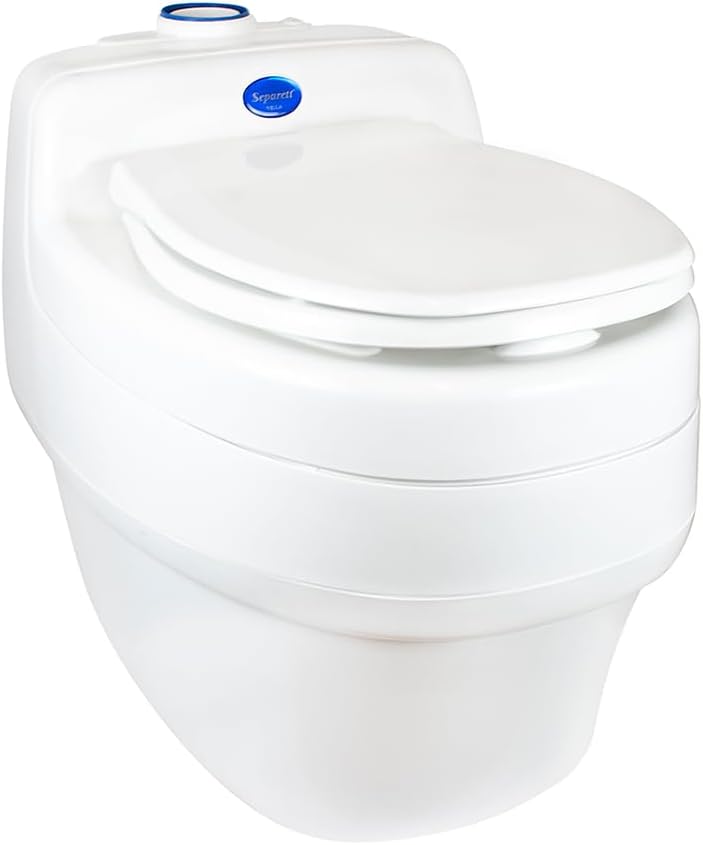
What we like: The Separett Villa 9215 is one of the most advanced composting toilets available, offering flexibility for homes that switch between on-grid and off-grid setups. It includes a fan that can be powered by either standard AC current or 12V DC.
Other things to know: Its design is clean and modern, giving you a bathroom experience that feels much closer to a traditional home toilet. It uses compostable liners to make servicing straightforward—simply remove the liner when the solid chamber is full. The ability to vent long distances (up to 20 feet) gives you installation flexibility.
- Dual AC/DC power support
- Polished, modern design feels like a household toilet
- Incredible long-distance venting capabilities
- Premium price point
- Larger footprint compared to ultra-compact models
Separett Tiny® Waterless Toilet
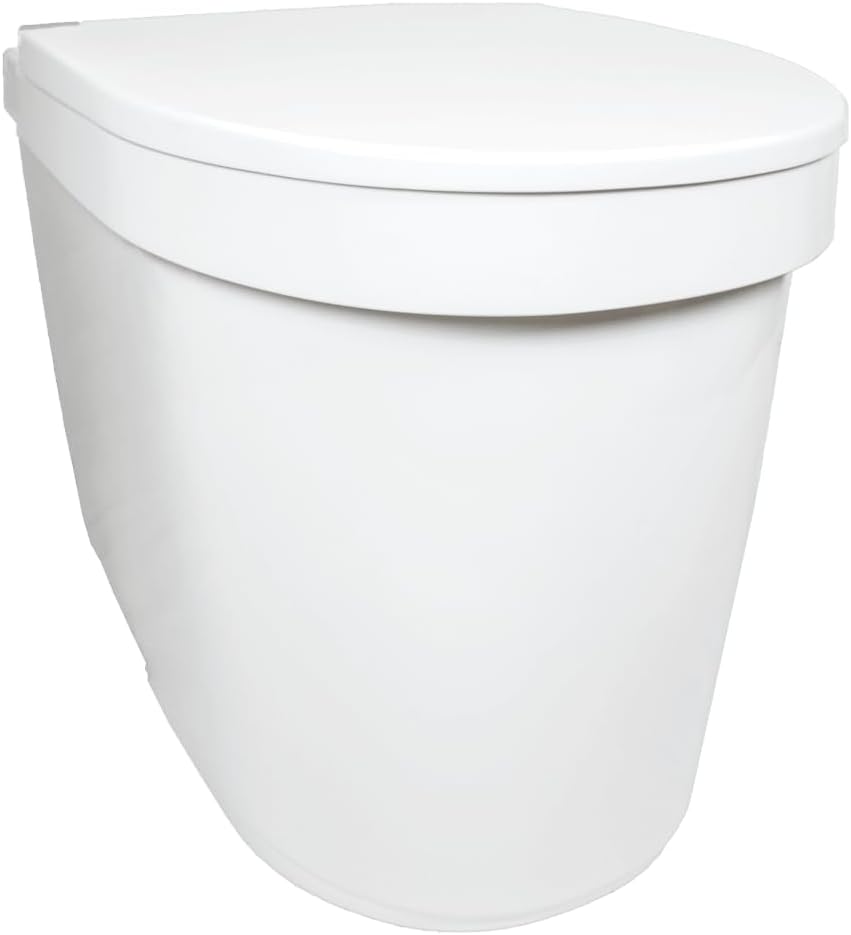
What we like: As its name suggests, the Separett Tiny® is built for tight quarters where every inch matters. This waterless, urine-diverting toilet is one of the most compact fully functional systems available.
Other things to know: Like the larger Villa, the Tiny® relies on urine diversion to cut down on odor. The solid chamber uses compostable liners, which make servicing straightforward. It doesn’t have the long-term capacity of the Villa, but for its size, it’s an elegant solution that doesn’t compromise on performance or aesthetics.
- Ultra-compact footprint for micro-baths
- No water or plumbing required
- Clean, modern design with privacy flap
- Smaller capacity requires more frequent emptying
Laveo Dry Flush

What we like: The Laveo Dry Flush is one of the simplest systems available, offering a completely bag-based solution. Each time you use it, waste is automatically twisted and sealed into a self-contained cartridge, preventing odors entirely.
Other things to know: It’s battery-powered, so no external connections are required. The convenience factor here is huge. There’s virtually no learning curve for visitors, and maintenance is as simple as replacing a bag. The trade-off is the ongoing cost of proprietary cartridges, which can add up for full-time living.
- Extremely clean and mess-free servicing
- No plumbing, venting, or water required
- Zero learning curve for guests
- Ongoing proprietary cartridge costs add up
- Not an eco-friendly "composting" process
Deluxe Flush 12V Macerating Toilet

What we like: This Deluxe Flush is a macerating toilet powered by 12V DC, designed to deliver a familiar bathroom experience in compact spaces. Its ceramic bowl is easy to clean, and the contoured seat feels much closer to a residential toilet than plastic alternatives.
Other things to know: Waste is ground by a macerator pump and flushed into a holding tank. Noise is minimal compared to many macerating units. You’ll need to plan plumbing and waste storage (black water tank) carefully, but for tiny homes with 12V power systems, this is a practical way to balance convenience and space.
- Comfortable ceramic bowl
- Familiar, traditional flush experience
- Quiet macerator operation
- Requires plumbing and a black water waste tank
- Uses water for every flush
Thetford Porta Potti (Cassette Style)

What we like: Cassette toilets are a long-standing choice for RVs, and they translate perfectly into mobile tiny homes. The Thetford cassette series is incredibly compact, reliable, and widely available at a highly affordable price point.
Other things to know: The system includes a built-in flush with a removable waste cassette that you manually empty at approved RV dump stations. Chemicals are typically used in the tank to break down waste and reduce odor. For weekenders, it's practical. For full-time stationary living, a composter is vastly superior.
- Highly budget-friendly
- Very compact and entirely self-contained
- Easy to empty at any RV dump station
- Requires purchasing chemical deodorizers
- Must be emptied frequently
Frequently Asked Questions
How much do tiny home toilets typically cost?
Expect a wide range. Entry-level solutions (like the Thetford cassette or simple bucket systems) can be $150 to $300. Premium composting units like Nature's Head or Separett typically range from $900 to $1,300. High-end incinerating toilets (like Cinderella) can run from $2,500 to over $4,000. Also budget for venting parts, liners, and ongoing consumables like coco coir.
Are there environmental benefits to composting toilets?
Yes. Composting and waterless systems drastically reduce freshwater use and eliminate the strain on septic or sewer systems. They're incredibly popular in off-grid solar setups and regions with water restrictions. By turning human waste into safe, usable compost, you are actively participating in sustainable eco-friendly living.
What maintenance should I plan for?
For a urine-diverting composting toilet, you will generally empty the liquid jug every 2-3 days (for two people), and empty the main solid bin every 3 to 6 weeks. You will also need to add a "bulking agent" (like peat moss or coco coir) to the solid bin to aid in the composting process and control moisture.
Do these toilets require power?
Most premium composting toilets (Nature's Head, Separett) require a very small amount of 12V DC power to run a tiny exhaust fan 24/7. This fan pulls air over the compost to dry it out and vents odors outside. The power draw is so minimal that it can easily be run off a basic solar setup. Incinerating toilets, however, require massive amounts of 120V/240V AC power or propane.
Do composting toilets smell bad?
No! This is the biggest misconception. A properly installed composting toilet with urine diversion and a running 12V exhaust fan should have almost zero odor inside the bathroom. Because the liquids (which cause the sewage smell) are separated from the solids (which dry out like dirt), the only smell is usually a faint, earthy scent similar to potting soil.
Join the Community
The Intentional Inbox
Get the latest off-grid gear reviews, builder guides, and tiny house market trends delivered straight to your inbox.
No spam. Just thoughtful tiny living tools.

