

Top Inverters and Chargers for Tiny Houses (2026 Guide)
Inverters convert your DC battery power into clean AC household electricity. Our guide covers 1000W to 4000W pure sine wave inverters with UPS switching and smart monitoring.
Find Your Perfect Inverter Size
Use our free calculator to determine the exact inverter capacity you need based on your appliances and peak power surge demands.
Calculate My Inverter SizeQuick Answer: Our Top Picks
- Top Pick: Victron MultiPlus 3000VA - The undisputed gold standard inverter/charger for high-end tiny homes.
- Value Pick: Giandel 2200W Inverter - Reliable mid-size power for weekenders and budget builds.
- Heavy Duty: Sun Gold Power 3000W - Low-frequency workhorse that handles massive AC and well-pump surges.
Why Pure Sine Wave Inverters are Essential
Inverters transform your 12V, 24V, or 48V DC battery power into the 120V AC electricity that runs your standard household appliances. Without an inverter, you would be limited to 12V DC appliances only (like in older RVs), dramatically restricting your options for refrigeration, cooking, and entertainment.
The difference between Pure Sine Wave and cheap Modified Sine Wave inverters is critical. Pure sine wave power perfectly mimics the clean power from a city grid. Modified sine wave power is choppy and distorted; it will cause laptops to overheat, microwave motors to hum loudly, and expensive compressor refrigerators to fail prematurely.
📐 Power Capacity & Surge
Size your inverter for your maximum simultaneous load plus a 25% safety margin. If you run a fridge, lights, and microwave at once, you need at least 2000W. Ensure it has a high "surge" rating to handle motor kick-ons.
🔄 Inverter vs. Inverter Charger
A standalone inverter only outputs power. An Inverter Charger can also be plugged into a generator or shore power pedestal to rapidly recharge your battery bank while simultaneously powering the house.
🔌 UPS Transfer Switch
Built into Inverter Chargers, a UPS (Uninterruptible Power Supply) switch seamlessly shifts your house from battery power to generator/shore power in 20 milliseconds, preventing your internet router and electronics from resetting.
💤 Idle Consumption
Inverters use power just by being turned on. A standard 3000W inverter might waste 30W an hour (720Wh a day). Look for Eco/Power-Save modes that drop idle draw to under 10W.
Top Inverters for Tiny Homes
Victron Energy MultiPlus 3000VA 12V Inverter Charger

What we like: Victron is the undisputed king of the mobile, marine, and tiny house off-grid market. The MultiPlus acts as a massive 3000-watt pure sine wave inverter, a highly sophisticated 120-amp battery charger, and a high-speed AC transfer switch all in one beautiful blue box.
Other things to know: It features "PowerAssist" technology. If you are plugged into a weak 15A generator or campsite pedestal, the MultiPlus will automatically pull extra power from your batteries to prevent the breaker from tripping when you turn on a microwave or AC unit. When paired with Victron's Cerbo GX, it offers the most advanced Bluetooth/WiFi smartphone monitoring on the planet.
- Unmatched reliability and build quality
- PowerAssist prevents tripping weak shore power breakers
- Incredible community support and documentation
- Premium price tag
- Requires additional dongles for Bluetooth monitoring
Giandel 2200W Pure Sine Wave Inverter (12V)

What we like: Giandel is one of the top-rated standalone inverter brands on Amazon for a reason. This 2200W unit provides rock-solid pure sine wave power at a highly accessible price point. With a 4400W surge peak, it can comfortably handle the startup kick of a tiny house refrigerator, alongside laptops, TVs, and lighting.
Other things to know: This is an inverter only (no built-in battery charger or UPS transfer switch). It comes with heavy-duty battery cables and a wired remote control, allowing you to mount the inverter in a hidden utility box while turning it on and off from the kitchen. It features intelligent cooling fans that remain totally silent until the load gets heavy.
- Highly affordable entry point for 2000W+ capacity
- Includes wired remote control and battery cables
- Isolated input/output design for electrical safety
- Not an Inverter Charger (cannot charge batteries via grid/generator)
Sun Gold Power 3000W Inverter Charger (12V)
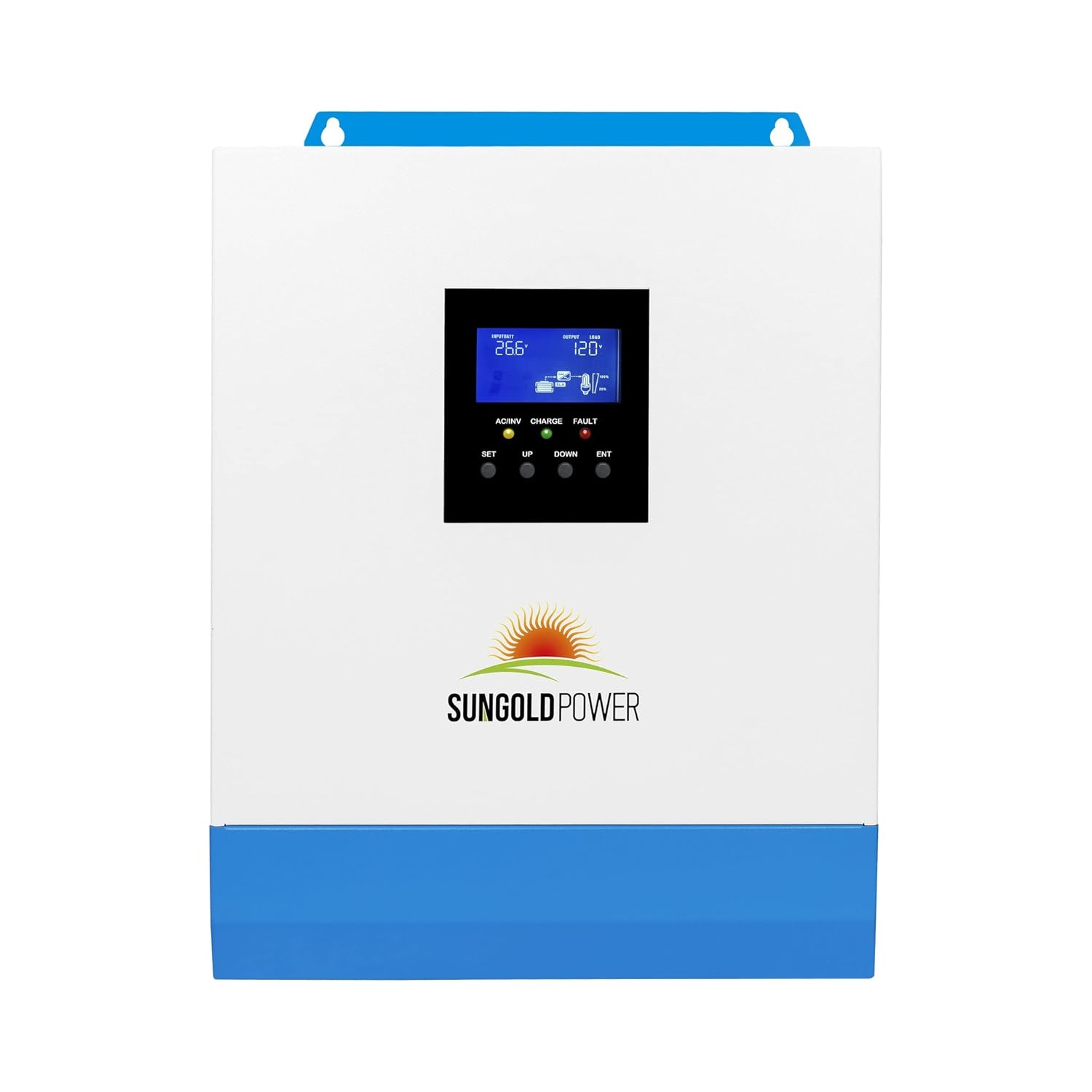
What we like: Most affordable inverters are "High Frequency" (HF), which makes them light but weak against massive surges. The Sun Gold Power is a "Low Frequency" (LF) inverter. It contains a massive copper transformer inside, allowing it to sustain a massive 9000W surge for 20 seconds. If you are running an air conditioner or a power-hungry well pump, this is what you need.
Other things to know: It acts as a full 3-in-1 system: a 3000W pure sine wave inverter, an automatic 80A battery charger (for when you plug into a generator), and an automatic transfer switch. The power save mode drops idle consumption heavily, but be aware—because of the heavy copper coils, this unit weighs over 50 pounds.
- Low Frequency design handles massive 9000W motor surges
- Built-in automatic battery charger and transfer switch
- Selectable battery type dial (Lithium, AGM, Gel)
- Extremely heavy and bulky compared to high-frequency units
AIMS Power 1250W Pure Sine Inverter Charger

What we like: Finding an affordable Inverter Charger in a smaller wattage is difficult. AIMS Power delivers a highly reliable 1250W pure sine wave inverter with a built-in charger in a very compact footprint. It’s perfect for minimalist tiny homes that only run LED lights, laptops, and a TV, but still want the ability to plug into a Honda generator during cloudy winter stretches.
Other things to know: It features a 10 millisecond transfer switch, meaning if your generator runs out of gas, the inverter instantly switches to your battery bank without your TV or internet router shutting off. It is marine-grade and conformally coated to resist moisture and humidity.
- Combines inverter, charger, and UPS in a small footprint
- Ultra-fast 10ms transfer switch prevents device reset
- Direct hardwire AC terminal block
- 1250W is not enough to run a microwave or coffee maker
BESTEK 1000W Pure Sine Wave Inverter

What we like: If you are just starting out with a single 100Ah battery and a 100W solar panel, spending $1,000 on a Victron inverter doesn't make sense. The BESTEK 1000W Pure Sine Wave provides incredibly clean power at an entry-level price. It features two 110V AC outlets and two fast-charging USB ports right on the front panel.
Other things to know: At 1000W, it handles the essentials: laptops, TVs, CPAP machines, and small fans. It is incredibly small and lightweight, making it easy to mount under a tiny house bench or inside an RV cabinet. It includes battery alligator clips and a 12V cigarette lighter plug for lower-wattage travel use.
- Highly affordable pure sine wave protection
- Dual AC outlets and built-in USB ports
- Small enough to fit anywhere
- No hardwire option to connect to a tiny house breaker panel
- Cannot handle high-surge appliances
Frequently Asked Questions
What size inverter do I need for my tiny house?
A 2000W to 3000W pure sine wave inverter is the sweet spot for a typical tiny house. This allows you to run a refrigerator while simultaneously using a microwave, coffee maker, or hair dryer. A 1000W inverter is only suitable if you never plan to use heating/cooking appliances.
What is a Pure Sine Wave inverter and why does it matter?
A pure sine wave perfectly mimics the smooth, clean electricity you get from a city power grid. Cheaper "Modified Sine Wave" inverters produce choppy, stair-step electricity. Modified sine waves will cause laptops to overheat, make audio speakers buzz, and completely destroy the motors in your expensive refrigerator and mini-split AC.
Do I need an Inverter Charger or separate units?
An Inverter Charger combines an AC inverter and a battery charger into one box. If you ever plan to plug your tiny house into an RV pedestal, a standard wall outlet, or a gas generator during the winter, an Inverter Charger is highly recommended. It automatically charges your batteries while passing grid power through to your outlets.
What is UPS transfer switch functionality?
A UPS (Uninterruptible Power Supply) transfer switch is built into inverter chargers. If you are plugged into a generator and it runs out of gas, the UPS switch instantly flips the house back to battery power in 20 milliseconds. The switch happens so fast that your lights won't flicker and your internet router won't reboot.
Should I choose a 12V, 24V, or 48V inverter?
Your inverter voltage must match your battery bank voltage exactly. For systems under 3000W, a 12V system is standard and easy to build. For massive systems (4000W+), you should upgrade to a 24V or 48V battery bank and inverter. Higher voltage cuts the amperage in half, allowing you to use thinner, cheaper cables and running much cooler.
What is split-phase and do I need it?
A standard inverter outputs 120V (standard wall outlets). A Split-Phase Inverter outputs both 120V and 240V simultaneously. You only need a split-phase inverter if you have heavy-duty 240V appliances in your tiny house, such as a traditional residential electric oven, a large electric water heater, or a 240V mini-split AC.
Can I install a power inverter myself?
Connecting the thick DC cables from the batteries to the inverter is very DIY-friendly. However, if you are hardwiring the AC output of the inverter directly into a standard household breaker box to power your wall outlets, it is highly recommended to hire an electrician to ensure proper neutral-ground bonding and code compliance.
Join the Community
The Intentional Inbox
Get the latest off-grid electrical guides, component reviews, and tiny house market trends delivered straight to your inbox.
No spam. Just thoughtful tiny living tools.

