


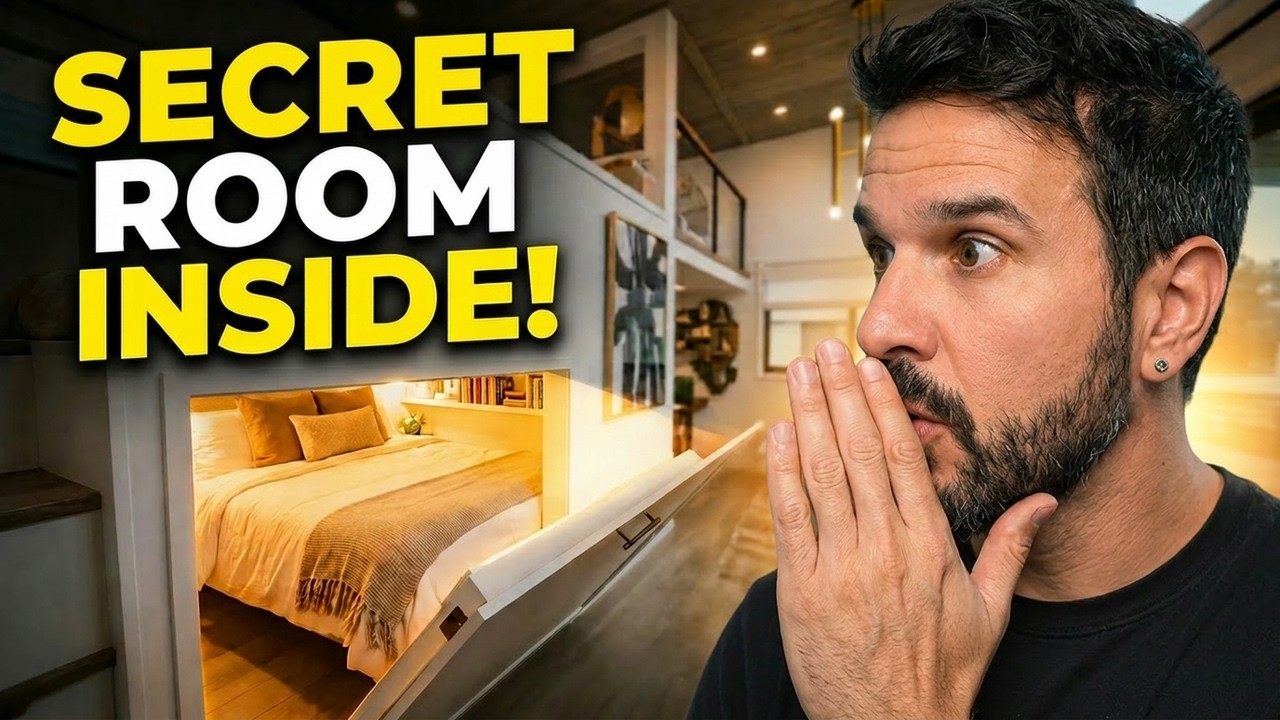
A 399-square-foot custom build by Utopian Villas, with a full-size kitchen, a marble bathroom that the owner made bigger by taking space from the bedroom, a flex loft, and a surprise guest room that most visitors don't even know exists. She was paying $2,300 a month to rent in Dallas. She's now owning her home for $1,000 less. That context matters for everything that follows.
Watch the full tour, then I'll break down the decisions worth taking notes on.
Bold Choices Work Better in Small Spaces
She could have gone with a ceiling fan in the living room. She wanted a chandelier. That's the right call, and the reasoning behind it is something more builders should think about: in a tiny home, you can afford to make bold choices precisely because the scale is small. One statement piece in a 400-square-foot space doesn't overwhelm the room the way it might in a larger one — it defines it. The chandelier is the first thing you notice when you walk in, and it immediately signals that this home was designed with intention rather than assembled from a standard spec sheet.
The same logic applies to the black alligator wallpaper she used on the island base panel. It's a detail that on paper sounds like it might be too much — and in person apparently reads as exactly right. That's personality applied to design. It's also practical: the textured finish doesn't scuff when people sit at the island. Both things can be true.
The Kitchen: Know What You Won't Give Up
Five-burner gas stove, convection oven, quartz waterfall countertops running through the whole kitchen, and a pull-out coffee bar with its own dedicated electrical circuit. The trade-off she made was the full-size pantry — she needed the dishwasher more. That's not a compromise, that's knowing yourself. Every tiny kitchen involves trade-offs; the ones that work are the ones where the owner is clear about which trade-offs are acceptable.
The pull-out coffee bar deserves its own mention. Having electrical run specifically for that station so the appliances are always ready without occupying counter space is the kind of custom touch that costs relatively little during the build and pays back daily. It makes the home feel built for one specific person — because it was.
The under-stair space getting a custom bar with pull-out drawers and storage below is the other detail I want to highlight. That volume is wasted in most builds. She turned it into one of the most functional corners of the kitchen.
The Bathroom: She Stole Space From the Bedroom and Was Right To
Marble floor-to-ceiling, gold fixtures, two niches — one facing outward for display, one on the interior side for the things you use but don't want visible. She describes it as not feeling like a tiny bathroom, and the reason is that she deliberately made it bigger by taking square footage from the bedroom.
Most people default to shrinking the bathroom in a tiny home without thinking through where they actually spend their time. She asked that question, got an honest answer, and designed around it. The result is a bathroom that functions well for someone who uses it heavily — makeup mirror with pull-out storage below, dedicated hooks, a window — rather than one that checks the minimum boxes and stays frustrating to use for years.
The dual niche approach is worth specifically noting for anyone planning a shower. One niche for things you want to display — decent bottles, candles, whatever — and one recessed on the interior wall for the things you want accessible but not visible from the room. It costs nothing extra during the tile phase and solves the "bottles everywhere" problem permanently.
The Mini Split Cover: A Small Thing That Matters
Mini splits are one of the best heating and cooling options for a tiny home — efficient, effective, and controllable room by room. They're also not particularly attractive. Boxing in or covering the unit in the bedroom is a small addition during the build that changes how the room reads at ceiling level. It's not dramatic, but it's the kind of finish detail that separates a home that feels complete from one that feels like the practical decisions were left visible.
She also runs three separate mini splits across the home — one per distinct space — because a layout with separated rooms won't distribute air effectively from a single unit. That's the right call for a home with a closed bedroom, a flex loft, and a separate surprise room. Each space stays at a comfortable temperature independently, which matters when guests are using the surprise room while she's sleeping in the main bedroom.
The Surprise Room: The Most Flexible Space in the House
What she calls the surprise room is a full-size bed tucked into a space that most visitors don't register as a room until they're standing in it. It has its own mini split, its own storage, and its own dresser. She describes it as flexible enough to become the primary bedroom if she wanted to swap — which means the home can genuinely reconfigure around changing circumstances rather than locking her into one layout for the life of the build.
The flex loft above sits at around 4'7" — slightly more than the standard tiny house loft — and serves as office, guest overflow, or apparently a dog lookout depending on the day. The combination of the flex loft and the surprise room means this 399-square-foot home can comfortably accommodate guests in two separate spaces while still feeling like a single-occupant home when they're gone.
The Financial Reframe That Changes Everything
She was paying $2,300 a month to rent a one-bedroom plus office in Dallas. Her tiny home payment runs around $1,300 — and she owns it. The financing is through an RV loan rather than a mortgage, which means interest rates can be higher and the timing of the purchase matters. But when she compares the monthly cost to her previous rent rather than to a conventional mortgage, the picture looks completely different.
That reframe is the one that doesn't get said clearly enough in tiny house conversations. The comparison most people make is tiny home vs. buying a conventional house — and on that comparison, tiny homes often lose on long-term appreciation. The comparison that's actually relevant for most people considering this move is tiny home vs. continuing to rent. On that comparison, owning a home for $1,000 less per month while building equity in something is a straightforward win. She makes that point clearly and it's worth hearing.
Join the Community
Own Something. Pay Less. Live Better.
Tours like this show what's possible when you design around your actual life — not the default floor plan. We share weekly insights on builds, design, and the real financial case for tiny living.
No spam. Just thoughtful tiny living tools.
.png)

